
Simple. Effortless. Effective.
LENS delivers a tiny signal that prompts your brain to recognize its own dysregulation — then neuroplasticity takes over.
Your LENS session, step by step
Book your session
Choose your session type — Individual, Couple, Group, or Event — and pick a time that works for you. We confirm within 24 hours.
We come to you
Your certified LENS practitioner arrives at your home, office, or venue with all equipment. Setup takes about 15 minutes.
Intake & assessment
Dr. McVeigh takes a few minutes to understand your goals — focus, stress, sleep, performance — and maps the sites he'll work on during your session, right at your location.
Your brain resets
A small sensor is placed on your scalp. LENS delivers an imperceptibly low electromagnetic signal that interrupts stuck brainwave patterns — prompting the brain to recognize its own dysregulation and reset through neuroplasticity. No effort required. Sessions are 20–30 minutes.
Debrief & next steps
After the session we review your response, answer questions, and recommend a training plan based on your goals and how your brain responded.
What is LENS neurofeedback?
LENS — the Low Energy Neurofeedback System — uses a tiny electromagnetic signal to prompt the brain to recognize its own dysregulation. No screens, no tasks, no effort on your part. The brain reorganizes itself through neuroplasticity — toward clearer, calmer, more efficient function. Results are often noticed within the first few sessions. Sessions are 20–30 minutes.
30+
Years of LENS research
0
Effort required from you
20–30
Minutes per session
100%
Non-invasive
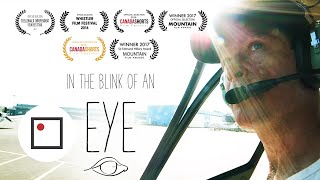
In the Blink of an Eye
An award-winning documentary following professional snowboarder Don Schwartz as he uses LENS neurofeedback to recover from a devastating heli accident. A powerful look at what this technology can do.
The science behind LENS
Over 30 years of published research supports LENS neurofeedback across a wide range of conditions.
Larsen, S., Harrington, K., & Hicks, S. (2006).
The LENS (Low Energy Neurofeedback System): A Clinical Outcomes Study on One Hundred Patients at Stone Mountain Center
Journal of Neurotherapy, 10(2–3), 69–78.
View publicationOchs, L. (2006).
The Low Energy Neurofeedback System (LENS): Theory, Background, and Introduction
Journal of Neurotherapy, 10(2–3), 5–39.
View publicationSchoenberger, N. E., Shif, S. C., Esty, M. L., Ochs, L., & Matheis, R. J. (2001).
Flexyx Neurotherapy System in the Treatment of Traumatic Brain Injury: An Initial Evaluation
Journal of Head Trauma Rehabilitation, 16(3), 260–274.
View publicationDonaldson, C. C. S., Sella, G. E., & Mueller, H. H. (1998).
Fibromyalgia: A Retrospective Study of 252 Consecutive Referrals
Canadian Journal of Clinical Medicine, 5(6), 116–127.
Mueller, H. H., Donaldson, C. C. S., Nelson, D. V., & Layman, M. (2001).
Treatment of Fibromyalgia Incorporating EEG-Driven Stimulation: A Clinical Outcomes Study
Journal of Clinical Psychology, 57(7), 933–952.
View publicationEsty, M. L., & Shif, S. C. (2006).
LENS Treatment of Patients with Brain Injury
Journal of Neurotherapy, 10(2–3), 79–90.
View publicationCommon questions
Traditional neurofeedback requires you to actively watch a screen and respond to feedback for 30–60 minutes per session. LENS is passive — you simply sit still while the system delivers a very brief, very low-power signal. Sessions are shorter, and many clients notice results faster. It's especially effective for people who find traditional neurofeedback difficult to engage with.
Yes. LENS uses an electromagnetic signal that is a tiny fraction of what your brain naturally produces — far weaker than a cell phone. It has been used safely for over 30 years and is non-invasive. As with any neurofeedback, some clients experience mild temporary fatigue after early sessions as the brain adjusts.
Many clients notice meaningful changes within 3–5 sessions. For lasting results, we typically recommend a package of 10 sessions. Your practitioner will give you a personalized recommendation after your first session based on your goals and response.
Most clients feel nothing during the signal delivery itself — it's imperceptible. The overall session is deeply relaxing. Some people feel a pleasant calm or mental clarity afterward. Occasionally, clients feel mildly tired after the first session or two as the brain begins to reorganize.
We're based at Sunnyside Neurocognitive Rehabilitation in Happy Valley, OR. We serve clients within a 20-mile radius at no extra charge. Beyond that, a travel fee applies based on distance. For corporate events and wellness retreats, we can travel further — just reach out to discuss.
No preparation needed — Dr. McVeigh comes to you. We recommend avoiding caffeine 2 hours before your session and being well-rested if possible. Clean, dry hair helps the sensors make good contact. That's it — we bring everything else.
Yes — and this is one of the most promising applications of LENS. Dysautonomia involves a dysregulated autonomic nervous system, which is driven by the brain. LENS helps the brain recalibrate its autonomic signaling, which can reduce heart rate instability, orthostatic intolerance, brain fog, and fatigue. Because sessions require zero physical exertion, LENS is particularly well-suited for people with POTS who can't tolerate conventional exercise-based therapies.
Many long COVID patients experience neurological symptoms — brain fog, cognitive fatigue, sleep disruption, anxiety, and autonomic dysfunction — that map directly onto what LENS addresses. The underlying mechanism (dysregulated brainwave patterns following a systemic insult) is consistent with what LENS was designed to treat. While large-scale long COVID-specific trials are still emerging, the mechanistic overlap is strong and many patients have reported meaningful improvement when other interventions failed.
ME/CFS involves central nervous system dysregulation that keeps the brain locked in a low-energy, high-symptom state. Critically, LENS requires no effort from you — there's no exertion, no cognitive load, no screen-watching. This makes it uniquely appropriate for people with ME/CFS who experience post-exertional malaise (PEM) with other therapies. LENS prompts the brain to recognize and exit the stuck pattern passively, which is why it's one of the few interventions that doesn't risk triggering a crash.
See it for yourself.
Book a session and experience LENS firsthand.
Want to go deeper? Learn about Dr. McVeigh or read the LENS neurofeedback research.